

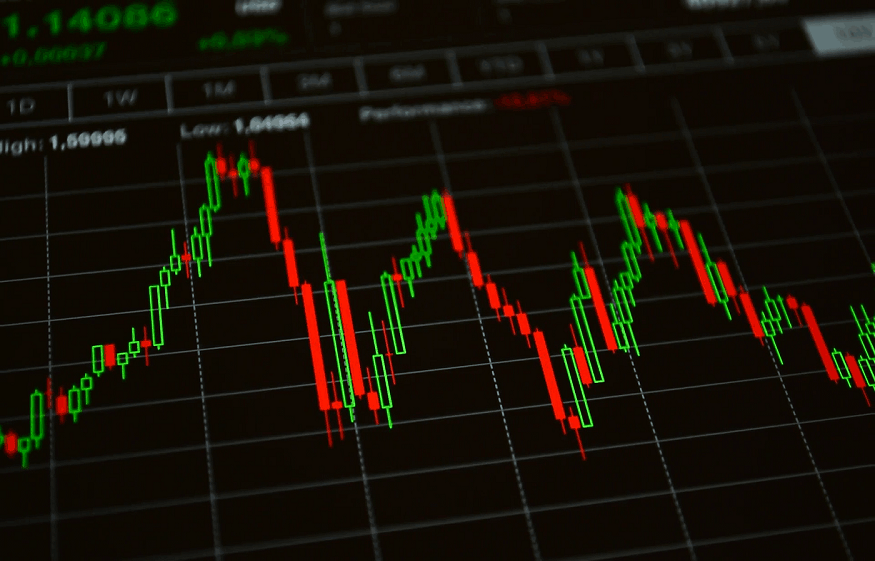
Global financial markets can appear chaotic from the outside. Prices move across currencies, equities, commodities, indices, and other instruments in response to economic data, central bank decisions, geopolitical developments, corporate results, and changes in investor expectations. For anyone trying to participate in these markets, the sheer volume of information can make it difficult to distinguish meaningful signals from background noise.
A structured approach offers a practical way forward. Instead of reacting to every headline or sudden price movement, traders and investors can develop a process that moves logically from understanding the broader market environment to identifying potential opportunities and managing risk. This approach cannot remove uncertainty, but it can make financial decisions more deliberate, consistent, and easier to review.
Start With the Broader Market Environment
Effective trade selection begins with understanding the environment in which an asset is moving. A currency pair, stock index, or commodity rarely operates in isolation. Interest rates, inflation expectations, employment conditions, economic growth, and investor sentiment can all influence prices. Looking at these factors first can establish useful context before attention turns to an individual trade.
Macroeconomic analysis becomes particularly important when markets are responding to changes in monetary policy. Central banks influence borrowing costs and economic expectations, while inflation and employment data can affect expectations for future interest-rate decisions. Major institutions such as the Federal Reserve, European Central Bank, and Bank of England regularly publish information that market participants consider when assessing economic conditions.
However, fundamental information should not automatically be interpreted as a direct trading signal. Markets often react to the difference between expectations and actual results. A seemingly positive economic announcement may coincide with falling prices if investors had already anticipated an even stronger outcome. Considering market expectations alongside headline data can therefore provide a more complete picture of what is driving price movements.
Read More: The Importance of Best Life Insurance Plans for Single-Income Families
Turn Analysis Into a Defined Trading Framework
Once the broader environment is understood, the next step is narrowing the market into specific opportunities. This is where a defined trading framework can make a meaningful difference. Rather than scanning dozens of charts and entering positions based on whichever movement appears most attractive, traders can establish clear conditions for what qualifies as a potential setup.
Technical analysis can support this process by examining price structure, trends, support and resistance, momentum, and volatility. The purpose is not to predict every market movement with certainty. Instead, technical tools can help identify situations where current price behaviour aligns with predefined criteria. Combining technical observations with fundamental context can also prevent decisions from becoming overly dependent on a single indicator.
Education is another important part of developing a framework. Traders who are building their understanding of financial markets can learn to invest with ADSS while developing their own understanding of market mechanics, risk, and decision-making. Good education should encourage investors to understand the reasoning behind a trade rather than simply follow an external recommendation.
Make Risk Management Part of Trade Selection
Risk management should not be treated as something that happens after a trade has been selected. It belongs at the beginning of the decision-making process. Before entering a position, traders should understand how much capital could be exposed, where the original trade idea would no longer be valid, and whether the potential opportunity justifies the level of risk being accepted.
Position sizing is one practical method for managing exposure. Larger positions can amplify both gains and losses, particularly when leverage is involved. Financial regulators and established market institutions consistently emphasise the risks associated with leveraged products because relatively small price movements can produce substantial changes in account value. Understanding these mechanics is essential before using leverage.
Risk management also requires accepting that losing trades are an unavoidable part of market participation. A structured strategy does not need every position to produce a profit. Instead, it should seek to keep individual losses within predetermined limits and maintain consistency across a series of trades. This can reduce the temptation to increase exposure after a loss or make emotionally driven decisions during periods of volatility.
Use Market Conditions to Refine Trade Selection
Different market conditions can favour different approaches. A strongly trending market may present opportunities for strategies designed to participate in sustained directional movement, while a range-bound market may require greater attention to established support and resistance levels. Changes in volatility can also affect entry points, position sizing, and the amount of risk associated with a particular setup.
Flexibility is therefore useful, but flexibility should not become inconsistency. Traders can establish several predefined scenarios and identify the conditions that would activate each approach. One strategy might require confirmation of a developing trend, while another could focus on price behaviour within a clearly established range. The key is that the decision follows defined criteria rather than an emotional response to a rapidly moving market.
Conclusion
Successful market participation starts with recognising that information alone is not enough. Global markets generate an enormous amount of data every day, but the ability to organise that information into a coherent process is what can make analysis more useful. By starting with the broader economic environment, identifying specific trade conditions, and considering risk before taking action, traders can approach opportunities with greater structure.
There is no framework that can eliminate losses or guarantee a particular outcome. Markets remain uncertain, and even carefully researched positions can move against expectations. The practical objective is to build a process that encourages patience, controlled risk, consistent analysis, and ongoing learning.